
News, Shark Conservation Chronicles
Dancing with the Blues: The graceful world of Blue Sharks
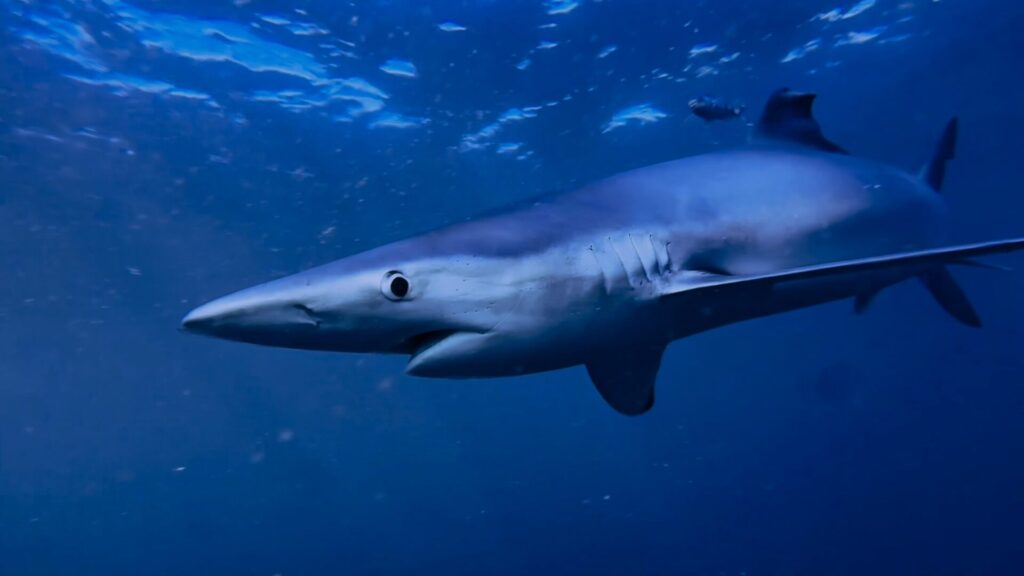
When you think of shark diving, your mind might jump to the more aggressive reputations of great whites or the imposing bulk of tiger sharks. But lurking in the open oceans, dressed in shimmering hues of cobalt and silver, is one of the most elegant and misunderstood members of the shark family — the blue shark (Prionace glauca).
A Profile in Elegance: Meet the Blue Shark
With a slender, torpedo-shaped body and long, wing-like pectoral fins, the blue shark is built for life in the open ocean. Reaching lengths of up to 12 feet (3.6 meters), this pelagic predator is instantly recognizable by its vibrant blue coloration on the top and stark white belly — perfect camouflage in the deep blue sea.
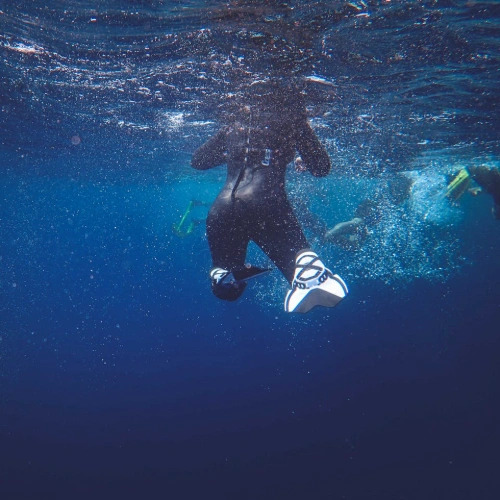
Unlike many of its more robust cousins, the blue shark’s movement is graceful, almost balletic, as it glides through the water with an effortless, hypnotic sway. It’s not just a visual delight for divers but also a testament to evolutionary refinement.
Global Travelers: Habitat and Range
Blue sharks are found in temperate and tropical oceans around the globe. From the Atlantic to the Pacific, from the coast of South Africa to the waters off the Azores and California, they thrive in the high seas, often far from land.
They are highly migratory, capable of crossing entire ocean basins in search of food, mates, and ideal water temperatures. Satellite tagging has revealed journeys of thousands of kilometers, making them true oceanic nomads.
What’s for Dinner? Diet and Behavior
Blue sharks are opportunistic feeders. Their diet includes:
- Small bony fish like mackerel and sardines
- Squid and other cephalopods
- Occasionally, seabirds or carrion
Despite their wide-ranging diet, they are not aggressive hunters like some other shark species. Their hunting style is more patient and opportunistic — circling prey with curiosity and striking with surprising speed when the time is right.
 Intelligence and Social Nature

Contrary to outdated shark stereotypes, blue sharks are intelligent and often curious about divers. They exhibit social behavior, sometimes traveling in loose groups, especially when food is abundant. Female blue sharks often form schools, while males tend to be more solitary.
This combination of intelligence and curiosity makes them a favorite among experienced open-ocean divers who seek meaningful interactions rather than adrenaline-fueled encounters.
Diving with Blue Sharks
Diving with blue sharks is a unique and exhilarating experience. Popular dive locations include:
- Azores, Portugal
- Cape Town, South Africa (especially in the summer months)
- California’s Channel Islands
- United Kingdom’s southwest coast (Cornwall during summer)
- Protea Banks, South Africa
Dives are usually conducted in the open ocean — sometimes miles offshore — using bait to attract the sharks in a controlled, respectful manner. Encounters are often serene, with sharks circling inquisitively, offering photographers and divers the chance to capture stunning visuals of one of the ocean’s most photogenic creatures.
Conservation Status: A Silent Crisis
Despite their beauty and ecological importance, blue sharks are among the most heavily fished shark species in the world — largely due to the demand for their fins in the global fin trade.
Conservation status: Near Threatened (IUCN Red List)
An estimated 10 to 20 million blue sharks are caught each year, often as bycatch in longline fisheries. Their slow reproductive rate — with females giving birth to litters of 25 to 100 pups after a gestation of up to a year — means populations cannot quickly recover from overexploitation.
Why Blue Sharks Matter

Blue sharks are apex and mesopredators that help regulate the health of marine ecosystems. By preying on weak or sick animals, they help maintain the balance of species below them in the food chain.
But beyond their ecological role, they offer us something more — a chance to appreciate the quiet, flowing beauty of the ocean and to challenge our preconceptions about sharks. They’re not just predators; they’re symbols of wild, open freedom.
Final Thoughts
Swimming with a blue shark is not just a thrill — it’s a lesson in grace, ecology, and the urgent need for ocean conservation. In a world increasingly shaped by our impact, these shimmering icons of the deep remind us of what’s at stake — and what’s still worth protecting.
Whether you’re a diver, marine biologist, or simply someone with a love for the natural world, the blue shark is a species that captures the imagination and inspires a deeper connection to our blue planet.