
News, Shark Conservation Chronicles
Ragged-Tooth Sharks: The fearsome-looking gentle giants of the sea

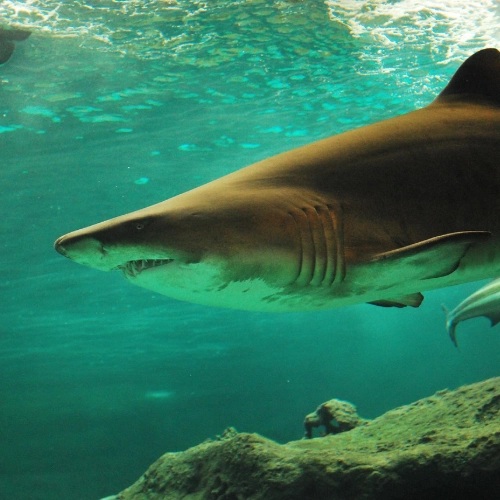
With jagged teeth protruding from snarling jaws, a bulky body, and a menacing stare, the ragged-tooth shark (also known as the sand tiger shark or grey nurse shark) looks every bit the part of a nightmare predator. But don’t be fooled by appearances — this shark is one of the most misunderstood and mellow species in the ocean.
Meet the Ragged-Tooth Shark 

The ragged-tooth shark (Carcharias taurus) is instantly recognizable by its:
- Rows of protruding, needle-like teeth (even when the mouth is closed)
- Stocky, torpedo-shaped body
- Two dorsal fins of similar size
- Brownish-grey coloration with red or brown spots along the back and sides
Despite their ferocious appearance, ragged-tooth sharks are generally docile and non-aggressive, especially toward humans. They are slow-moving, curious creatures that are often content to swim peacefully around divers.
Where They’re Found
Ragged-tooth sharks inhabit subtropical and temperate coastal waters across the globe. You’ll find them:
- Along the east and south coasts of South Africa
- Off the eastern coast of Australia
- Along the coast of the eastern United States
- In parts of the Mediterranean and Red Sea
They prefer rocky reefs, caves, and wrecks — often resting in sheltered spots during the day and hunting at night.
A Reproductive Oddity: Cannibal Siblings
One of the most fascinating — and brutal — aspects of the ragged-tooth shark is its reproductive strategy. After fertilization, several embryos begin developing inside the female’s uterus, but only one pup per uterus survives. Why?
Because the strongest embryo eats its siblings — a phenomenon known as intrauterine cannibalism or embryophagy.
This means that ragged-tooth sharks give birth to just two well-developed pups per pregnancy (one from each uterus), making them extremely slow to reproduce, and thus highly vulnerable to overfishing and population decline.
What’s on the Menu?
Ragged-tooth sharks are nocturnal hunters, feeding mainly on:
- Small bony fish
- Squid
- Crustaceans
- Occasionally smaller sharks
They use their long, needle-like teeth not to chew, but to seize and grip slippery prey, which they swallow whole.
Diving with Ragged-Tooth Sharks
Diving with ragged-tooth sharks — affectionately called “raggies” in South Africa — is an unforgettable experience. They are incredibly photogenic and often unfazed by divers, making close encounters common and safe when approached respectfully.
Top dive spots include:
- Protea Banks (South Africa): Especially during the winter mating season (May to November), when large numbers congregate in caves along the reef.
- Aliwal Shoal (South Africa): Another hotspot for mating aggregations.
- Wolf Rock (Australia): Known for female ragged-tooths gathering for breeding.
These sites offer the unique opportunity to observe sharks in their natural habitat without the need for baiting or cages.
Conservation Status
Due to their slow reproductive rate and susceptibility to fishing, ragged-tooth sharks face growing conservation concerns.
IUCN Red List Status:
- Critically Endangered in some regions (e.g., the Mediterranean)
- Vulnerable to Endangered elsewhere depending on local pressures
Major threats include:
- Overfishing and bycatch
- Habitat degradation (especially nursery areas)
- Shark nets and drumlines along popular beaches
South Africa has been a leader in protecting this species, with many marine protected areas and seasonal bans on fishing during breeding periods.
Why They Matter
Ragged-tooth sharks play an important role in maintaining the balance of reef ecosystems by regulating the populations of mid-level predators and prey species. Their presence indicates a healthy marine environment.
But beyond their ecological role, these sharks challenge our assumptions. They remind us that fearsome appearances can hide peaceful natures — and that predators aren’t always villains in the story of the sea.
Final Thoughts
In a world where sharks are often demonized, the ragged-tooth shark is a powerful ambassador for shark conservation and education. They are approachable, fascinating, and critically important to the ecosystems they inhabit.
To dive with a ragged-tooth shark is to come face-to-face with an ancient lineage, a prehistoric silhouette that glides silently through the modern ocean — peaceful, powerful, and profoundly misunderstood.
Let’s protect them not just because they need it — but because we need them too.